
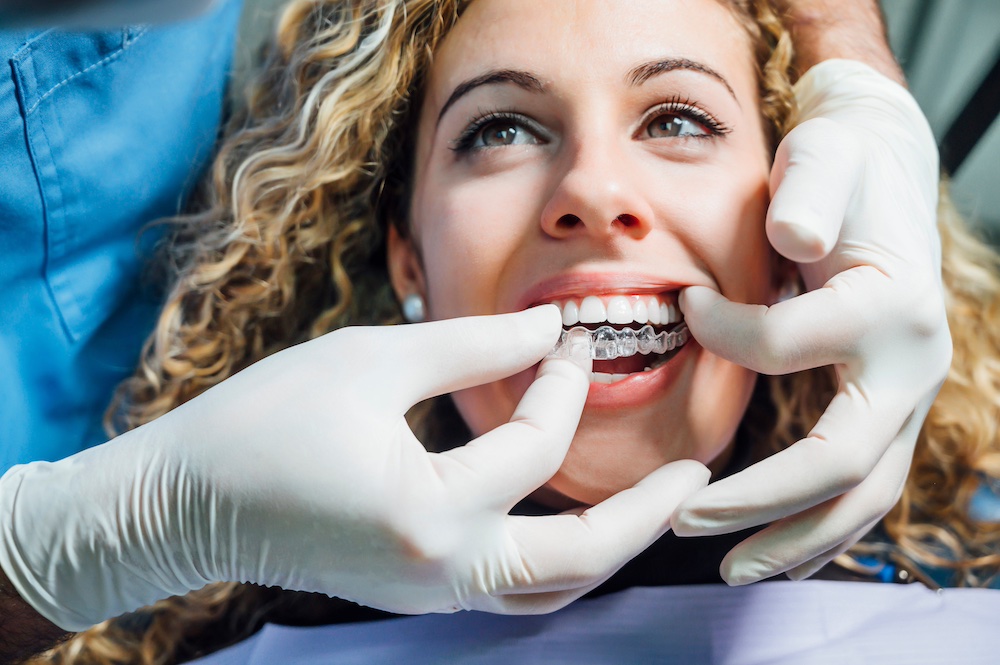
Invisalign® aligners are virtually invisible, comfortable, and often a faster acting alternative to traditional braces for kids, teens, and adults. While both methods align teeth for a more perfect smile, Invisalign's key advantage is that the clear aligners are completely removable, which makes eating, drinking, brushing and flossing easier.
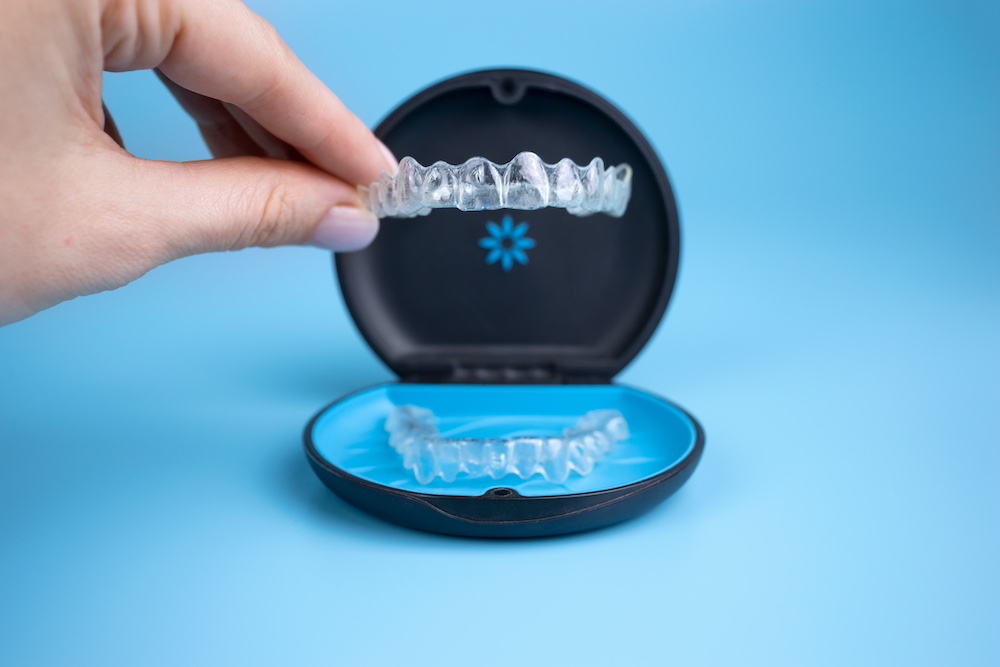
What sets Invisalign apart? They are made with a special, proprietary material called SmartTrack, which makes your teeth move more predictably. Plus, unlike other clear aligners and retainers, Invisalign is custom-cut to match your exact gum line—meaning they fit comfortably and look completely natural.
How do Invisalign aligners work?
Invisalign treatment uses a series of clear, removable aligners to gradually move your teeth into alignment. After your doctor fits your very first set or aligners, you’ll just have regular check-ins to monitor your progress and keep your new smile on track.
How often do I need to wear my aligners?
Patients should adhere to the recommended daily wear time of 20 to 22 hours. Successful Invisalign treatment depends entirely on your compliance. Because the aligners are removable, staying committed is up to you.
Do Invisalign aligners hurt?
It’s completely normal to feel some tightness or slight discomfort when you first start. That’s just the aligners doing their job and gently shifting your teeth! This feeling usually fades after just a day or two.
Do you sleep with Invisalign aligners?
Achieving your desired results means wearing your Invisalign aligners for 20 to 22 hours daily – so yes, sleeping in them is a must!
What is the cost of Invisalign?
Invisalign is generally comparable in cost to traditional braces. Your actual investment will depend on the complexity of your specific case, which your doctor will determine during your consultation.
Does insurance cover Invisalign?
Many dental insurance plans offer coverage for Invisalign. To find out exactly what your plan includes, check with your insurer directly. You can also use Flexible Spending Accounts (FSAs) or Health Savings Accounts (HSAs) to help fund your orthodontic treatment. When booking your consultation, ask the office which insurance plans they accept. The office team can also contact your provider to verify your coverage.
For more information, visit Invisalign.com